


The Story Behind QKapital: Two Partners, One Mission to Open U.S. Real Estate to the World
Every real estate transaction eventually comes down to trust, between a buyer and a realtor, between a borrower and a lender, and between an investor and the market they’re putting capital into. QKapital was built around that idea more than two decades ago, with a specific focus on a group of buyers traditional mortgage lending had largely ignored: foreign nationals investing in U.S. real estate.
Florida Condo Projects Closing in 2026: Why These Deliveries Matter for Investors
Florida’s pre-construction condo pipeline is entering one of its busiest delivery windows in years. Across Miami and South Florida, a wave of towers that broke ground during the pre-pandemic and pandemic-era buying surge are now reaching completion, turning years of deposits and anticipation into actual closings.
For realtors and investors, this delivery wave is more than just a construction milestone. Closings trigger financing decisions, valuation resets, and rental market shifts that ripple across the surrounding submarket. Here’s a look at some of the notable projects closing across Florida this year, and why each one matters.
Florida and Texas Real Estate Outlook: What the Rest of 2026 Looks Like for Investors
Halfway through 2026, the data on Florida and Texas real estate is telling a consistent story: both states are moving into more balanced, buyer-favorable conditions after several years of tight inventory and rapid appreciation. For investors and realtors, that shift changes both the risks and the opportunities heading into the back half of the year.
Market Corrections Create Opportunities: How Florida Real Estate Investors Can Prepare in 2026
Florida’s housing market has shifted noticeably over the past couple of years. Inventory has grown in several metros, price appreciation has cooled from its post-pandemic pace, and headlines have been quick to frame every data point as a warning sign. For experienced investors, though, this phase of the cycle tends to read very differently: not as a reason to sit out, but as a period worth preparing for.
This article breaks down what a market correction actually means, why fundamentals matter more than headlines, and how Florida investors and their realtors can position themselves before the best opportunities appear.
Florida’s Condo Insurance and Reserve Crisis: What It Means for Investor Financing
Florida’s condominium market is going through the most significant regulatory shift in decades, and it’s reshaping how investors buy, hold, and finance condo properties across the state. Rising insurance costs, mandatory structural reserve funding, and tighter lending guidelines have converged into what many in the industry are now calling a full-blown affordability and financing crisis for condos.
For realtors and investors who built their strategy around condo units as accessible, cash-flowing rental properties, this shift changes the math. Understanding what’s actually happening, and how it affects condo financing Florida, is now essential to advising clients accurately in 2026.
DSCR Loans Explained: A Smart Financing Option for Real Estate Investors in Florida

Florida’s investment property market has never been more competitive. From Miami condos generating strong short-term rental income to single-family homes in Tampa and Orlando feeding steady long-term rental demand, investors are actively hunting for financing that keeps pace with their growth plans. Traditional mortgage underwriting, built around W-2 income and personal debt-to-income ratios, often can’t keep up
Miami Rental Demand and Rent Growth During the 2026 FIFA World Cup: Which Neighborhoods Benefit Most?
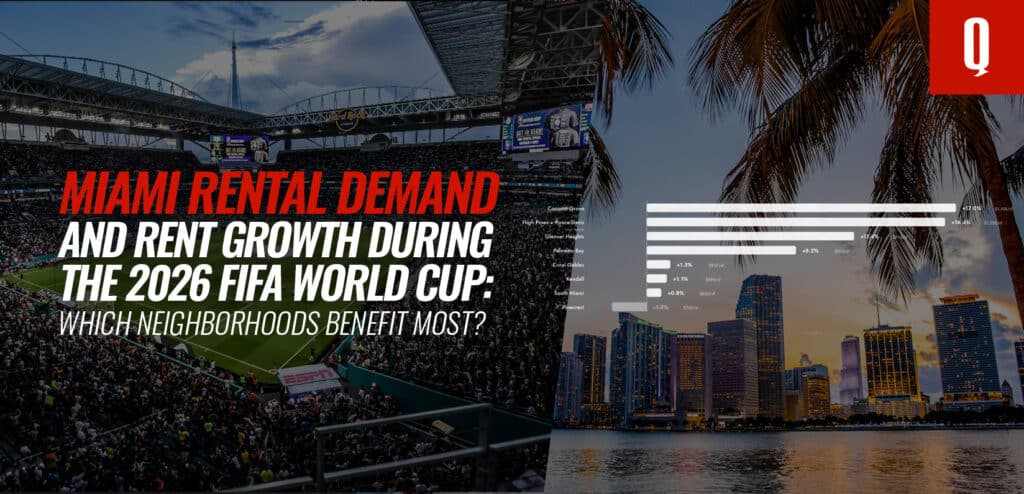
The 2026 FIFA World Cup brought millions of visitors to the United States, with Miami serving as one of the tournament’s host cities. While hotels accommodated a large portion of travelers, many visitors—including families, business travelers, media professionals, and extended-stay guests—also looked for alternative accommodations throughout the city.
FIFA World Cup 2026: The Real Estate Investment Case for Florida

In the summer of 2026, the United States will co-host the FIFA World Cup alongside Canada and Mexico in what is expected to be the largest sporting event in history. With 48 teams competing across 16 host cities, the tournament will generate an unprecedented level of global attention, economic activity, and investment interest throughout the country. For real estate investors focused on Florida, understanding the implications of this event — and positioning accordingly — represents a significant strategic opportunity.
Formula 1 Miami Grand Prix: What It Really Means for Florida Real Estate Investors

Every May, the eyes of the world turn to South Florida. The Formula 1 Miami Grand Prix is no longer just a sporting event, it has become one of the most powerful catalysts for economic activity, luxury brand positioning, and real estate demand in the entire United States. For investors focused on the Florida property market, understanding what happens before, during, and after race weekend is essential for making informed, strategic decisions.
Where Capital Will Move in 2026: Key Networking Events Driving Real Estate Investment in Miami, South Florida, and Orlando

Florida continues to rank among the most attractive real estate markets in the United States, and as 2026 advances, investment momentum is increasingly concentrated in specific regions—particularly Miami, South Florida, and Orlando. These markets are not only fueled by population growth and international demand but also by the strategic movement of high-net-worth capital.